
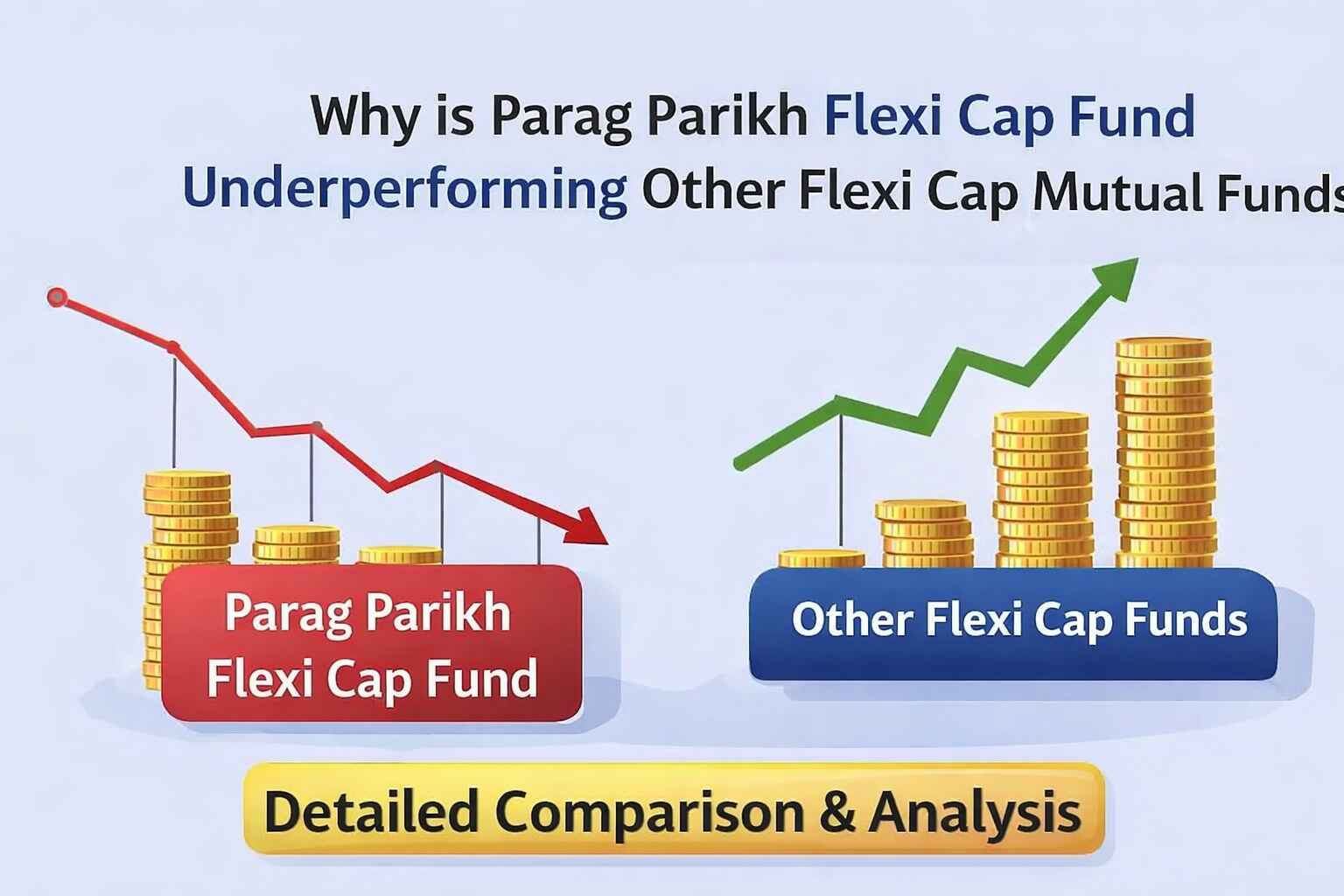
Flexi cap mutual funds have been among the most popular equity categories among Indian investors in the last decade. However, one interesting trend investors are noticing recently is: Parag Parikh Flexi Cap Fund (PPFCF) — once considered a category leader — is lagging several peer flexi cap funds in recent performance periods. Does this mean the fund has lost its edge? Or is this simply a phase driven by market cycles and investment philosophy? In this detailed analysis, let us decode why Parag Parikh Flexi Cap Fund is underperforming peers using recent performance data and portfolio strategy comparison.
What is a Flexi Cap Mutual Fund?
As per SEBI regulations, a flexi cap fund is an open‑ended equity scheme that can invest dynamically across large‑cap, mid‑cap and small‑cap stocks with minimum 65% equity exposure. This flexibility allows fund managers to shift allocations based on market opportunities.
About Parag Parikh Flexi Cap Fund
- Launch: May 2013
- AUM: ₹1.33 lakh crore (largest flexi cap fund in India)
- Benchmark: Nifty 500 TRI
- Investment style: Value‑oriented + long‑term buy & hold
The fund aims to generate long‑term capital appreciation through Indian equities, selective global stocks and limited debt instruments.
Performance Comparison vs Peers
Based on recent data:
| Fund | 1Y Return | 3Y CAGR | 5Y CAGR |
|---|---|---|---|
| HDFC Flexi Cap Fund | 17% | 23% | 21% |
| Bank of India Flexi Cap | 20% | 24% | 21% |
| Edelweiss Flexi Cap | 19% | 21% | 18% |
| Kotak Flexi Cap | 20% | 19% | 15% |
| Parag Parikh Flexi Cap | 10% | 21% | 19% |
Key takeaway
- Short term (1Y): clear underperformance
- Medium term (3Y–5Y): still competitive
- Long term (10Y): remains a strong compounder
The issue is recent relative underperformance, not structural weakness.
Why Parag Parikh Flexi Cap Fund is Lagging Peers?
1️⃣ Conservative Investment Philosophy
Most flexi cap funds today are aggressively positioned toward midcaps, momentum stocks and cyclical sectors. However, PPFCF follows valuation discipline, quality businesses and long holding periods.
This works well over long cycles but lags during momentum‑driven bull markets.
Example: HDFC Flexi Cap and Bank of India Flexi Cap benefited from cyclical rallies while PPFCF avoided expensive momentum names.
2️⃣ Lower Mid & Small Cap Exposure
The biggest driver of outperformance in the last 2–3 years has been the midcap and smallcap rally.
Aggressive peers increased allocation to faster‑growing midcaps, while PPFCF remained relatively large‑cap oriented. Hence peers captured the rally better.
3️⃣ Cash & Debt Allocation Dampens Returns
PPFCF occasionally maintains cash positions or arbitrage/debt exposure to protect downside risk.
Impact:
- Provides stability during corrections
- Reduces upside during strong rallies
Example from data:
- PPFCF 6‑month return ~1%
- Many peers delivered 4–5%
4️⃣ International Exposure Constraints
Historically, PPFCF invested in global companies like Alphabet and Meta. However, overseas investment limits imposed across the industry reduced fresh allocations while Indian markets outperformed global markets recently.
This temporarily reduced comparative performance advantage.
5️⃣ Massive AUM Size Effect
With over ₹1.33 lakh crore AUM:
- Deploying capital becomes harder
- Fund must focus on liquid large caps
- Limited flexibility to enter smaller emerging opportunities
Smaller funds can move faster and generate tactical alpha.
6️⃣ Value Style vs Momentum Market
Markets since 2023 rewarded momentum and high‑beta stocks. PPFCF follows value investing, which historically underperforms during late bull phases but performs well during corrections.
Examples Where Peers Outperformed
HDFC Flexi Cap Fund
- Strong cyclical positioning
- Higher participation in rallies
Bank of India Flexi Cap Fund
- 3Y CAGR of 24%
- Aggressive allocation shifts
Edelweiss Flexi Cap Fund
- Tactical sector rotation supported recent alpha generation
Meanwhile PPFCF prioritized downside protection.
Does Underperformance Mean Investors Should Exit?
Not necessarily.
PPFCF historically provides:
- Better downside protection
- Lower volatility
- Consistent long‑term compounding
The fund has delivered strong annualised returns since launch despite temporary phases of underperformance.
When Parag Parikh Flexi Cap Typically Outperforms
This fund tends to shine when:
- Markets correct sharply
- Valuation bubbles burst
- Quality stocks outperform speculative ones
Conservative positioning becomes an advantage in volatile markets.
Who Should Invest in This Fund?
Suitable for
- Long-term investors (7–10 years)
- Moderate risk investors
- Core portfolio allocation seekers
Not suitable for
- Short-term performance chasers
- Aggressive midcap seekers
Final Verdict – Temporary Underperformance or Structural Issue?
| Factor | Status |
|---|---|
| Strategy broken? | No |
| Market cycle mismatch? | Yes |
| Long-term potential intact? | Yes |
| Short-term alpha pressure? | Yes |
Parag Parikh Flexi Cap Fund is designed to win marathons, not sprints.
Investor Takeaway
Investors should also remember an important diversification principle — one should avoid investing only in a single flexi cap mutual fund, even if it has a strong long‑term track record. Every fund goes through phases of underperformance due to market cycles, fund manager style, or sector allocation differences. If an investor relies solely on one flexi cap fund and it underperforms for a prolonged period, it can potentially delay or even derail long‑term financial goals. Hence, it is prudent to diversify within the category itself by holding at least one additional flexi cap fund with a different investment style (for example, combining a conservative value‑oriented fund like Parag Parikh Flexi Cap with a more aggressive or growth‑oriented flexi cap fund). This approach helps balance risk, improves consistency of returns, and reduces dependency on a single fund manager’s strategy.
Instead of comparing only 1‑year returns, investors should ask whether they want aggressive returns or consistent compounding.
A balanced strategy could be:
- 40% Conservative Flexi Cap (PPFCF)
- 30% Aggressive Flexi Cap
- 30% Midcap or Index funds
This combines stability with growth potential while managing risk effectively.
💡 Pro Tip for Investors
Do not depend on a single flexi cap fund for your core equity allocation.
A smart strategy is to combine funds with different investment styles so that one fund compensates when another goes through a temporary underperformance phase.
Example Combination Strategy:
Investment Style Example Approach Conservative / Value Style Parag Parikh Flexi Cap Fund Growth / Momentum Style HDFC Flexi Cap or Edelweiss Flexi Cap This diversification within the same category improves return consistency, reduces style risk, and helps investors stay invested during market cycles without frequently switching funds.
Disclaimer: Mutual fund investments are subject to market risks. Investors should read all scheme-related documents carefully before investing.
