
Digital payments are now a cornerstone of modern commerce, with global digital transactions expected to exceed $10 trillion in 2025. Their adoption spans virtually all industries, driven by mobile payment apps, biometric verification, AI-powered fraud detection, and secure tokenization methods. For business owners, understanding the mechanics of online payment gateways is crucial to staying competitive in a rapidly evolving market.
What Is a Digital Payment System?
A digital payment system is an electronic infrastructure that enables financial transactions without physical cash. It includes mobile wallets, UPI platforms, payment gateways, and online banking systems, all secured by encryption, tokenization, and multi-factor authentication.
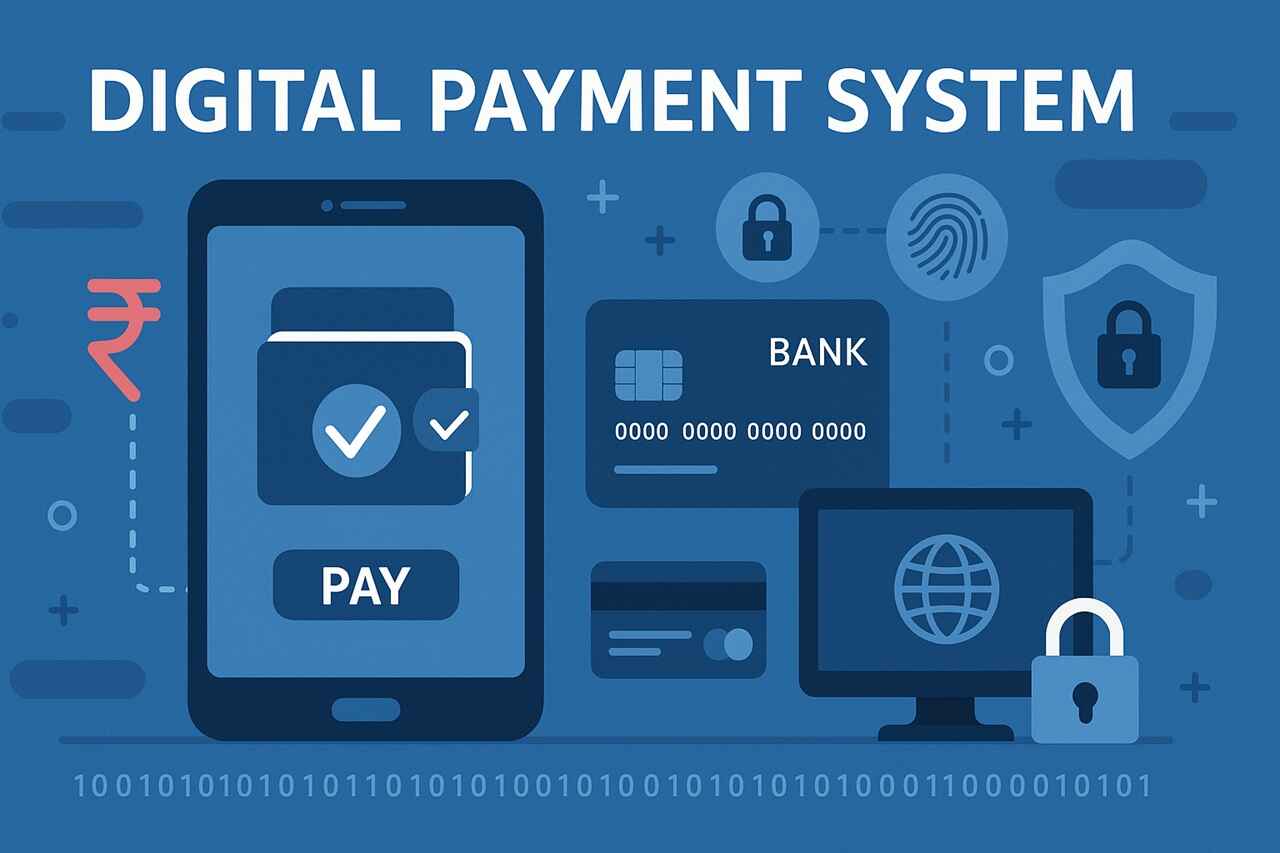
Meaning of Digital Payment and Electronic Payment System
A digital payment is any transaction that uses digital channels to transfer funds. An electronic payment system (EPS) involves all electronic methods of transferring funds.
How Digital Payment Methods Work
This is how a process of completing a digital payment normally works:
- Customers access a device or platform and send their money to the merchant.
- The merchant accepts the digital payment.
- The payment service provider mediates the transaction.
There are multiple ways in which the user can initiate a payment. For example, simply tapping, scanning a QR code, or confirming through an app.
Difference Between Digital and Electronic Payment
The table below gives an insight into the main differences between digital and electronic transactions in e-commerce:
| Digital | Electronic |
|---|---|
| UPI, Paytm, Google Pay, QR code payments | IMPS, NEFT, RTGS |
| Typically instant | Settlement may take minutes to hours |
| Focused on convenience and user-friendly interfaces | Focused on secure fund transfers and infrastructure-level operations |
| Convenience and user experience | Secure fund transfer and infrastructure reliability |
Nevertheless, both of these are most often used interchangeably.
Types of Digital Payment Systems
Multiple types of digital payment systems can be used across various domains:
- Mobile wallets;
- UPI and instant bank transfers;
- Credit/debit card systems;
- QR code payments;
- Mobile banking apps;
- Contactless NFC payments;
- Buy Now Pay Later (BNPL) services;
- Crypto payments;
- And online banking platforms.
Usually, businesses use several at once within one platform. It gives buyers an opportunity to choose the payment method that’s most convenient for them.
Different Types of Digital Payment Methods
Businesses and consumers rely on several methods, such as:
- UPI-based payments;
- Wallets;
- Bank transfers;
- Buy Now Pay Later;
- QR code scanning;
- Recurring payments;
- Crypto payments.
Once again, these are usually presented together, which is relevant in a world where every customer has their own preferred banking method to use.
Digital Payment Gateway and Payment Processing Systems
A digital payment gateway is a secure bridge between the customer, merchant, and bank, encrypting data, validating transactions, and ensuring secure transfers. Popular providers include Razorpay, PayU, and Stripe. Payment processing systems handle transaction settlements and communication between financial institutions, ensuring smooth fund transfer.
Mobile Banking and Digital Payment Apps
Thanks to mobile banking, users can check balances, transfer funds, pay bills, verify transactions, and manage accounts.
Secure Digital Transactions and Authentication
Modern digital payments rely on multi-layer security systems, including:
- Two-factor authentication (2FA)
- Biometrics (fingerprint, face recognition)
- Tokenization
- Encryption
- AI-based fraud detection and transaction monitoring
- Risk-scoring algorithms and real-time anomaly detection
These security layers not only ensure transaction integrity and reduce fraud but also comply with international standards like PSD2 and regional regulations such as RBI guidelines in India, enhancing customer trust.
Digital Payment in India: Evolution and Growth
India is steadily becoming a global leader in digital payments. This is thanks to the infrastructure, innovation, and government policies.
Digital Payment Trends in India
With the rise of digital money transfers among Indian customers and merchants, several distinct trends have emerged. They include:
- Explosive growth of UPI;
- Rise of contactless and QR payments;
- Integration of Aadhaar-based authentication;
- Increasing use of digital wallets;
- Merchant-friendly digital payment systems;
- BNPL expansion;
- Digital lending integrated with payment apps.
In general, it’s becoming easier than ever to complete payments via electronic means in the country.
Popular Payment Methods and Apps in India
The most widely used digital payment tools today include:
- UPI (Google Pay, PhonePe, Paytm, BHIM);
- Mobile wallets (Paytm Wallet, Amazon Pay);
- Cards;
- Internet banking;
- QR-based merchant payments;
- FastTag and automated toll payments.
E-commerce platforms often use all these methods interchangeably.
Government Initiatives Supporting Digital Payments in India
The local government in India is actively enhancing the adoption of digital-based payment means through its Digital India campaign, a well-developed UPI (Unified Payments Interface) ecosystem, Aadhaar-linked authentication, and a GST digital tax framework.
How Banks and Payment Gateways Drive Payments in India
Banks provide the infrastructure, authentication, and means of settlement for each transaction. Thanks to payment gateways, businesses get APIs, dashboards, and fraud-prevention tools.
Benefits and Advantages of Digital Payments
Undeniably, the main advantages of digital payments are speed, convenience, and transparency.
Key Benefits of Digital Payment Systems for Businesses
For companies, digital payment systems mean faster transaction settlement and higher sales. Besides, they get simplified access to international transfers.
Advantages of Using Digital Payment Solutions
The benefits of digital solutions can be summarised as follows: they offer interoperability between multiple systems, reduce the risk of human error, and improve payment security.
Electronic Payment Systems: Efficiency and Transparency
The best way to track payments and ensure their transparency is by using an electronic payment system. Merchants can get a hold of their audits and save time thanks to real-time financial reporting.
How Digital Payments Improve Banking and Transactions
Thanks to digital transactions, banks benefit from reduced queue times, higher automation, better customer engagement, and better security for every operation.
Future of Digital Payments and Emerging Technologies
In the future, national payment corporations in India will integrate digital identity verification, user behavior tracking, and real-time risk assessment.
Innovations in Digital Payment Solutions
Digital payment platforms actively integrate innovative features to improve payment experience:
- Embedded finance;
- Digital identity verification;
- Advanced fraud detection tools;
- IoT-based payments;
- Voice-enabled transactions.
Mobile payment systems remain at the centre of innovation, since customers don’t need to carry a physical payment card anymore.
The Role of Artificial Intelligence in Secure Digital Payments
Traditional payment methods are becoming more and more advanced compared to the traditional methods, mainly thanks to AI integration. It plays an important role in:
- Fraud monitoring;
- Transaction pattern analysis;
- User behavior tracking;
- Real-time risk assessment;
- Personalized payment recommendations.
When used together, these tools create a unique and secure payment experience.
The Future of Payment Systems in India and Beyond
India will remain one of the global leaders, thanks to the support for innovation from the National Payments Corporation of India.
Choosing the Right Digital Payment Solution for Your Business
In such a vast world of digital payments, it’s important to choose the tool that will allow you to receive payments without trouble.
How to Select the Best Digital Payment Method
Your preferred payment method might be different from the one that will work best for your business. Consider not only the popular digital payment systems, but also those that lead in terms of security.
Factors to Consider When Implementing a Payment System
When choosing the right payment provider for your business, consider the following factors:
- Type of customers;
- Transaction volume;
- Industry requirements;
- Integration with your platform.
The ease of integration is a major benefit of any banking gateway.
Improving Customer Experience with Digital Payment Technologies
Making a bill payment easy is not a difficult task: with the right provider, you can make a secure payment experience a reality for every customer.
Conclusion: Why Businesses Should Embrace Digital Payment Trends
The world is rapidly moving away from cash. Businesses that switch to modern digital payment methods become more efficient, keep customers happier, and gain a long-term advantage.
The Ongoing Shift Toward Cashless and Electronic Payment Systems
We’re moving toward cashless economies that are faster, clearer, and fairer. Since people live on their phones, businesses must adopt digital payments to survive.
How Digital Payment Systems Shape the Future of Global Commerce
Digital payments make it easy for people and businesses to buy, sell, and send money anywhere. They help connect stores, apps, and services in one smooth system and support the new ways we handle money today.
FAQ: Digital Payment Systems
What is a digital payment system?
A digital payment system is an electronic framework that enables bank account holders to make payments through multiple digital payment options like apps, wallets, UPI, and online banking. These systems facilitate secure transfer of payment information and allow businesses to accept payments efficiently.
How do digital payments work?
Digital payments work by authenticating the user, verifying payment details, and processing the request through a payment processor or payment network. Digital payments involve multiple methods like card payments, bank transfers, or digital wallets, ensuring payments can be made instantly and securely.
What are the main types of digital payments?
The range of digital payment options includes card payments, UPI, mobile wallets, bank transfers, QR payments, contactless payments, and Buy Now Pay Later (BNPL). Digital payments offer flexibility for both businesses and consumers to choose the most convenient payment mode.
What are the benefits of digital payments?
Digital payments provide faster transactions, improved security measures, lower costs, transparency, and a better customer experience. Payments enabled by these systems allow businesses to manage payment information efficiently and offer multiple payment options to their customers.
What is the difference between digital and electronic payments?
Digital payments are transactions that are mobile-first, instant, and designed for convenience, while electronic payments include broader bank-driven systems and traditional payment networks. Both digital and electronic payments enable secure and efficient fund transfers.
How secure are digital-based payment systems?
The security of digital payments relies on advanced security measures like encryption, tokenization, biometrics, and AI-powered fraud detection. These safeguards ensure that payment information is protected when payments are made online.
What is the future of digital payments?
The future of digital payments involves AI-driven security, CBDCs, IoT-based transactions, and global instant payment networks. Digital payments provide innovative methods for making payments and facilitate seamless financial operations worldwide.
How to choose the right digital payment solution for your business?
When selecting a digital payment solution, consider security measures, fees, customer preferences, and scalability. Choose payment systems that allow you to accept payments efficiently and support multiple payment modes.
How popular are digital payments in India?
Digital payments are transactions that are increasingly popular in India, with UPI, wallets, and card payments driving adoption. Shifting to digital payments is supported by government initiatives, creating a wide range of digital payment options for both consumers and merchants.
What are the advantages of digital payment gateways for businesses?
Digital payment gateways enable businesses to accept payments securely, provide faster settlements, reduce cash-handling risks, and improve operational efficiency. Payments offered through these gateways allow companies to expand their customer base and provide multiple payment options.

- 3 Mutual Fund Portfolio Mistakes I See Repeated Every Market Cycle - February 16, 2026
- How Often Do Top Mutual Funds Actually Stay on Top? A 10-Year Reality Check - February 14, 2026
- What 15 Years of SIP Data Tells Us About Market Timing (And Why It Fails) - February 12, 2026